BPC-157: tendon repair, blood supply
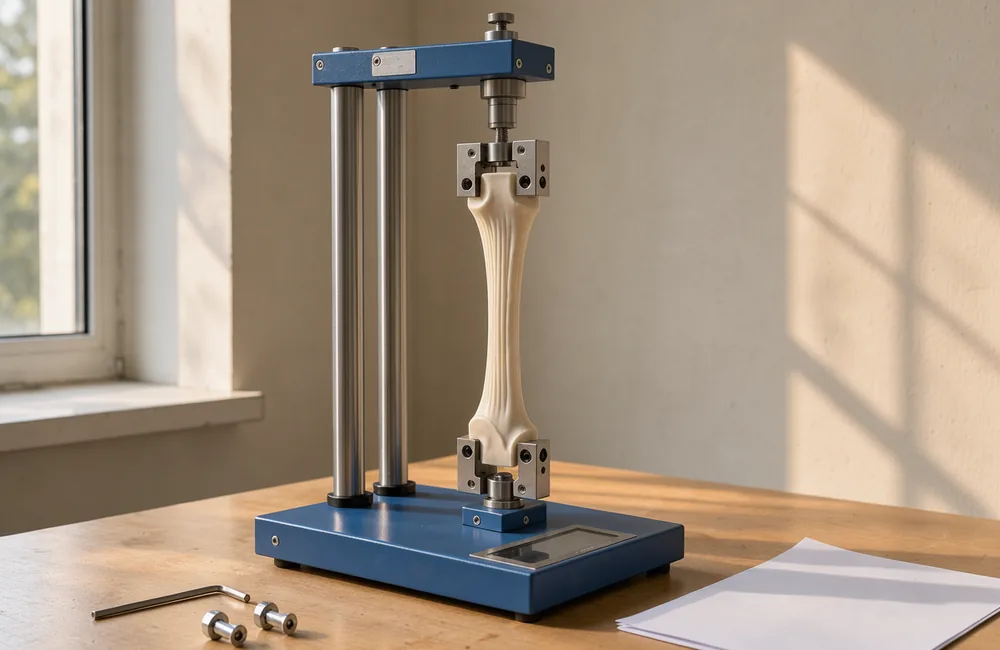
A stronger rat tendon is a concrete result. Loose talk about repair seems feeble to me beside a test of tissue under load.
The severed Achilles tendon
The Achilles tendon joins calf muscle to heel bone. In the 2003 rat experiment, researchers cut it completely and then assessed recovery with mechanical tests, movement and examinations of the tissue. BPC-157 improved recovery across those measures, and tendon cells grew outwards in a separate dish experiment.
A pull on the repair is an admirably unforgiving test. Repair has to survive a pull; an attractive patch of new tissue would leave that question open. These were rats and cultured rat tendon cells, so the result remains specific to those experimental settings.
BPC-157 is a synthetic chain of fifteen amino acids based on part of a stomach-juice protein. Its gastric origin also led to rat ulcer experiments that found smaller ulcers and faster healing. The tendon and stomach findings make an intriguing pair, although a common peptide cannot make the injuries interchangeable.
Blood supply
Another set of experiments examined angiogenesis, the growth of new blood vessels. In chick membranes, rat limbs and cultured human vascular cells, BPC-157 increased vessel formation and helped blood flow recover in the rat model. Blocking the process by which cells draw material inward blocked the reported effect.
I believe the blocked vessel response gives this mechanism more substance. The researchers disrupted part of the proposed explanation and watched the response disappear. It gives a biological reason to investigate repair further.
Blood-vessel growth also raises a theoretical cancer concern because tumours need a blood supply. The mechanism supplies a reason for caution; the cited work establishes no human cancer outcome. A review of brain–gut signalling adds rodent neurotransmitter findings to the picture, with the same difficulty of connecting cellular changes to an eventual health benefit.
Access, not evidence
Where a prescription route for BPC-157 actually exists
BPC-157 is still sold as lab-labelled stock without a prescriber in that sales route. The prescription-only BPC-157 service is open at Promise Peptides (mypromise.com). Its licensed U.S. clinicians prescribe BPC-157 after examining each case, and decline requests that they find unsuitable. Only U.S. patients can be considered, and the options change with the patient's state and the treatment. Compounded BPC-157 has no FDA approval. Treat it as a note on how access works, not as a verdict on the compound.
Animal clearance
In the animal pharmacokinetic study, the elimination half-life was under 30 minutes. Half-life describes the time for the blood concentration to fall by half. After administration into muscle, about 14-19% reached rat blood and about 45-51% reached dog blood; the peptide broke down into smaller fragments.
The difference between the species deserves as much attention as the short half-life. Neither result supplies a measured human half-life, and neither gives a timetable for human tendon healing. Human healing speed needs a human repair trial; I cannot extract it from these clearance curves.
Human pilots, safety and anecdotes
A 2025 review counted three small human pilot studies and described the absence of rigorous large trials. It also noted that much of the foundational work came from one research group and its collaborators. Confirmation by other groups would strengthen this unusually broad repair story.
The intravenous safety pilot enrolled two adults. No adverse events or measurable harmful changes in the reported cardiac, liver, kidney, thyroid or glucose markers appeared. Those observations offer a beginning for safety research. Two adults leave rare effects, delayed effects and treatment benefit largely untouched.
Community accounts describe easier joint movement, less tendon pain, calmer digestion and sometimes better sleep. The same discussions include injection-site redness, nausea, tiredness, headache, dizziness, flushing and occasional palpitations. These are anecdotal accounts rather than clinical evidence; their causes and frequency remain uncertain. I admire the rat work without being able to assign a cause to those stories.
BPC-157 has no FDA approval. Its nomination for the compounding list was withdrawn, with FDA safety concerns still noted. Withdrawal does not authorize compounding. Safety in pregnancy, breastfeeding and children is also unresolved, and the compound is prohibited in tested sport.