PT-141: desire, distress, reward
Desire, distress and reward sound close together in ordinary conversation. The experiments give them separate questions.
The hamster reward experiment
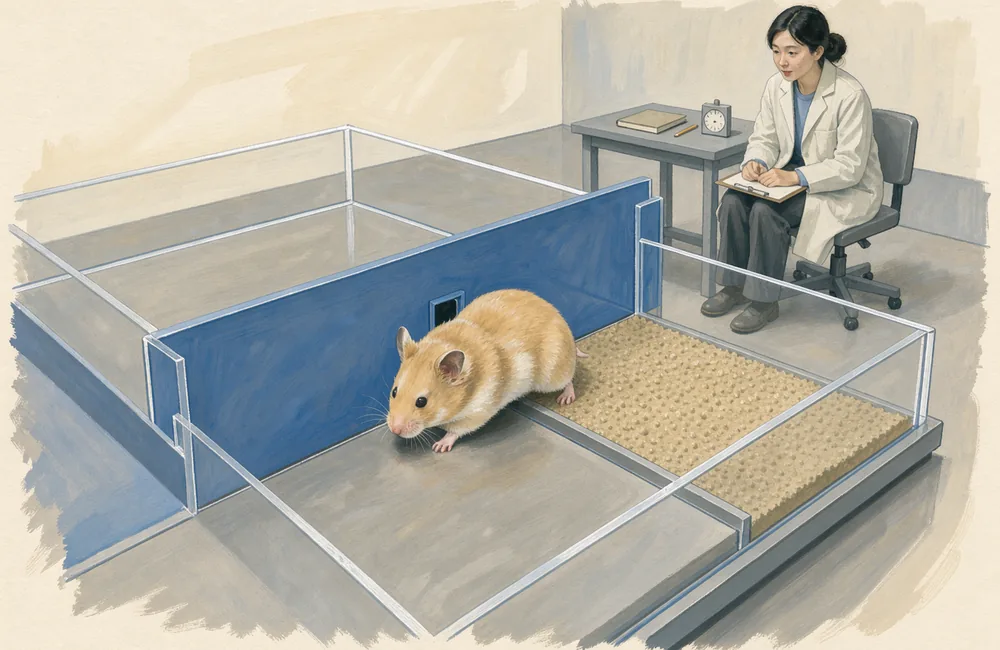
In a 2025 female Syrian hamster study, bremelanotide did not increase the rewarding aspect of sexual interaction in a place-preference test. That test asks whether an animal develops a preference for a place associated with an experience. Low and high study amounts also left the measured melanocortin-receptor gene expression unchanged in the examined reward circuitry.
My instinct had been to bundle desire and reward together. This experiment pries them apart. Its finding concerns a hamster model and a particular reward circuit; it cannot cancel a result about women's reported desire, or explain every step of the drug's action.
PT-141, the research name for bremelanotide, is a synthetic ring of seven amino acids acting on melanocortin receptors in the brain. That biology puts motivation and arousal at the centre of the question. It is a different proposition from increasing blood flow.
RECONNECT trial outcomes
The two RECONNECT Phase 3 trials enrolled 1,267 premenopausal women with hypoactive sexual desire disorder, or HSDD. Over 24 weeks, bremelanotide improved desire and reduced desire-related distress compared with placebo. The integrated desire-score difference was +0.35. Statistical significance describes confidence in a group difference; that number alone leaves the size of a felt improvement hard to picture.
I regard a modest average benefit as worth describing carefully. It offers more information than either enthusiasm about a desire drug or dismissal of a small score. The population was specific, and the benefit came alongside nausea, flushing and headache.
In the brain-imaging crossover study of 31 women with HSDD, desire increased for up to 24 hours and responses to sexual images changed. The imaging helps explore central processing. The hamster reward experiment asks another question in another species, so the two findings can coexist without sharing a single explanation.
Extension-study nausea
The 52-week open-label extension enrolled 684 women. Desire improvements were sustained and no new safety signal emerged, while nausea affected 40.4%, flushing 20.6% and headache 12.0%. In an open-label extension, participants know they are receiving the drug; that design differs from the blinded comparison in the initial trials.
Those nausea figures make the trade-off tangible to me. A treatment aimed at a welcome feeling can produce a distinctly unwelcome one. Continued benefit and tolerability deserve to be considered together rather than giving all the space to the desire score.
Community accounts describe increased wanting, arousal or sensitivity, and sometimes no useful change despite side effects. They also describe flushing, headache, fatigue, local irritation and skin or gum darkening. These are anecdotal accounts, not clinical evidence; reports from men and other groups outside the approved population cannot broaden the trial findings.
Approved use and contraindications
The bremelanotide prescribing information covers acquired, generalised HSDD in premenopausal women. Approval excludes men, postmenopausal women and use to enhance sexual performance. Material offered as a PT-141 research chemical sits outside the approval for the prescription formulation.
The label warns of a temporary blood-pressure increase and contraindicates use in uncontrolled hypertension or known cardiovascular disease. Repeated use can cause pigment changes. Pregnancy and breastfeeding safety remain unsupported. The half-life in the label is about 2.7 hours, a pharmacokinetic measurement rather than a timetable for a person's experience.
I credit the narrow benefit demonstrated here, with meaningful costs. The trials of desire and distress give a firmer answer than anecdotes, while leaving plenty of room for an individual to get little benefit or substantial nausea. Decisions about that balance require medical care.